
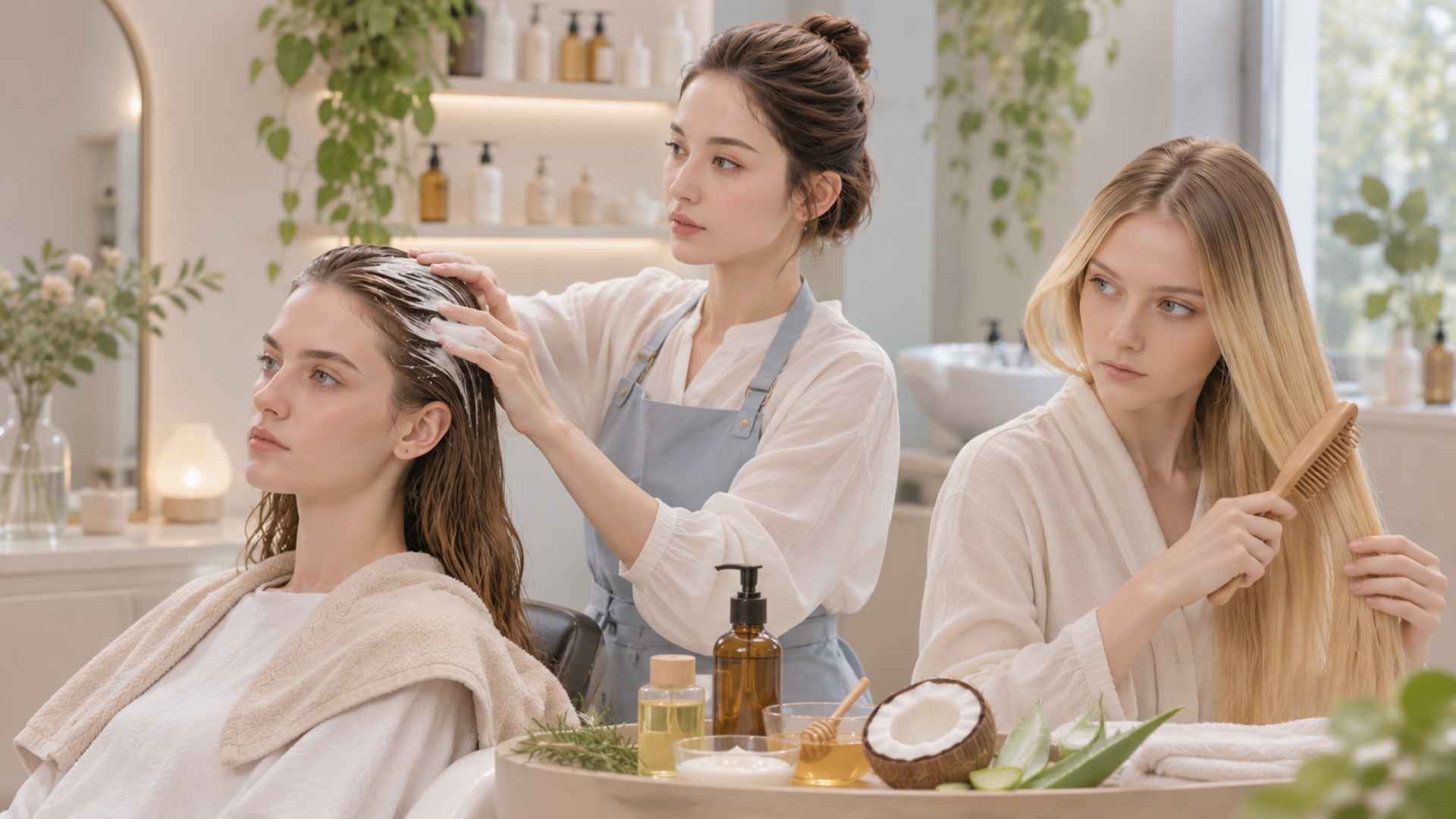
Healthy hair depends on more than the number of products used. Hair texture, scalp oil production, washing habits, chemical treatments, and exposure to heat all influence how strands look and feel. The visible portion of hair is made primarily of keratin and cannot repair itself biologically once damaged. Conditioners and oils can improve its surface and reduce friction, but they cannot permanently restore a broken fiber. This distinction matters when comparing everyday hair products with natural treatments that promise softer, smoother, or stronger looking hair.
Product labels can be confusing because terms such as “natural,” “clean,” and “nourishing” do not establish that a formula works better for every person. An oily scalp may need more frequent cleansing, while dry or tightly coiled hair often benefits from less frequent washing and richer conditioning. The most useful routine is based on how the scalp behaves and how easily the lengths become dry or tangled, rather than on a fixed schedule or an ingredient trend.
Shampoo, Conditioner, and Scalp Care
Shampoo primarily removes sebum, sweat, dirt, and product residue from the scalp. Dermatologists generally recommend applying shampoo to the scalp rather than rubbing it aggressively through the full length of the hair. As the lather rinses away, it cleanses the strands without unnecessary friction. Washing frequency varies considerably: straight hair with an oily scalp may need daily washing, while dry, curly, or coily hair may require less frequent cleansing. Neither approach is inherently healthier; persistent buildup, itching, and excess dryness are more useful signals than a universal rule.
Conditioner serves a different purpose. Ingredients such as fatty alcohols, conditioning polymers, and silicones can make the outer hair surface feel smoother, reduce static, and make detangling easier. Silicone containing formulas are not automatically harmful; their suitability depends on the formula and individual preferences. Fine hair may feel weighed down by heavy products, so applying conditioner mainly to the mid lengths and ends can help. Dry or textured hair may tolerate more generous application. Leave in conditioner can offer extra slip, particularly before combing or tying hair into a ponytail. Protein based conditioners can temporarily make weakened hair feel firmer, although their effects are cosmetic rather than biological repair and diminish after subsequent washes.
Natural Oils and Plant Based Treatments
Coconut oil has some of the clearest published evidence among commonly used hair oils. In a 2003 study in the Journal of Cosmetic Science, researchers compared coconut, sunflower, and mineral oils and found that coconut oil reduced protein loss from damaged and undamaged hair under the tested conditions. Its fatty acid composition helps explain why it can enter the hair fiber more readily than some other oils. This finding concerns protection against protein loss, not proof that coconut oil makes hair grow faster or reverses split ends. Results can also differ with hair type and the amount applied.
Other plant based ingredients deserve more cautious expectations. Aloe vera gel may feel soothing on skin, but evidence that it repairs damaged hair shafts or stimulates scalp hair growth is limited. Rosemary oil has been studied for hair growth, yet the available human research is too limited to treat it as an established substitute for medical hair loss treatments. Essential oils can also cause contact dermatitis, especially when applied undiluted. Tea tree oil, for example, may irritate sensitive skin. Trying a small amount of a properly formulated product first is more sensible than applying concentrated oils directly to the scalp. Even a successful patch test cannot rule out a later reaction, so persistent redness, burning, or itching calls for stopping the product.
Daily Habits That Support Hair Condition
Even suitable products cannot fully compensate for rough handling. Wet hair needs particular care because water changes the fiber’s physical properties and forceful detangling can contribute to breakage. A wide tooth comb, gentle movements from the ends upward, and a soft towel or cotton T shirt can reduce unnecessary pulling. Excessive heat from flat irons and curling tools can damage the cuticle, so lower temperatures and less frequent use are preferable. Heat protectant products can help reduce some damage, but they do not make high temperatures harmless.
Scalp symptoms should guide product choices as well. Persistent flaking is not always a sign of dryness and may be related to dandruff or seborrheic dermatitis. Medicated shampoos containing ingredients such as ketoconazole or selenium sulfide are used for these conditions, and the directions matter because some formulas require several minutes of contact before rinsing. Heavy oils and homemade mixtures should not replace appropriate treatment when itching, redness, or scaling persists. Sudden shedding, painful scalp changes, or distinct areas of hair loss deserve medical evaluation.
Long term hair care is usually a matter of practical consistency rather than complicated treatments. Cleanse according to scalp needs, condition the lengths, test new botanical products cautiously, and limit repeated friction from tight hairstyles or narrow elastics. Natural ingredients may be useful, but their effects should be judged by evidence and comfort rather than by their origin alone. The goal is manageable hair with fewer tangles and less breakage, supported by habits that suit its texture and the condition of the scalp.