
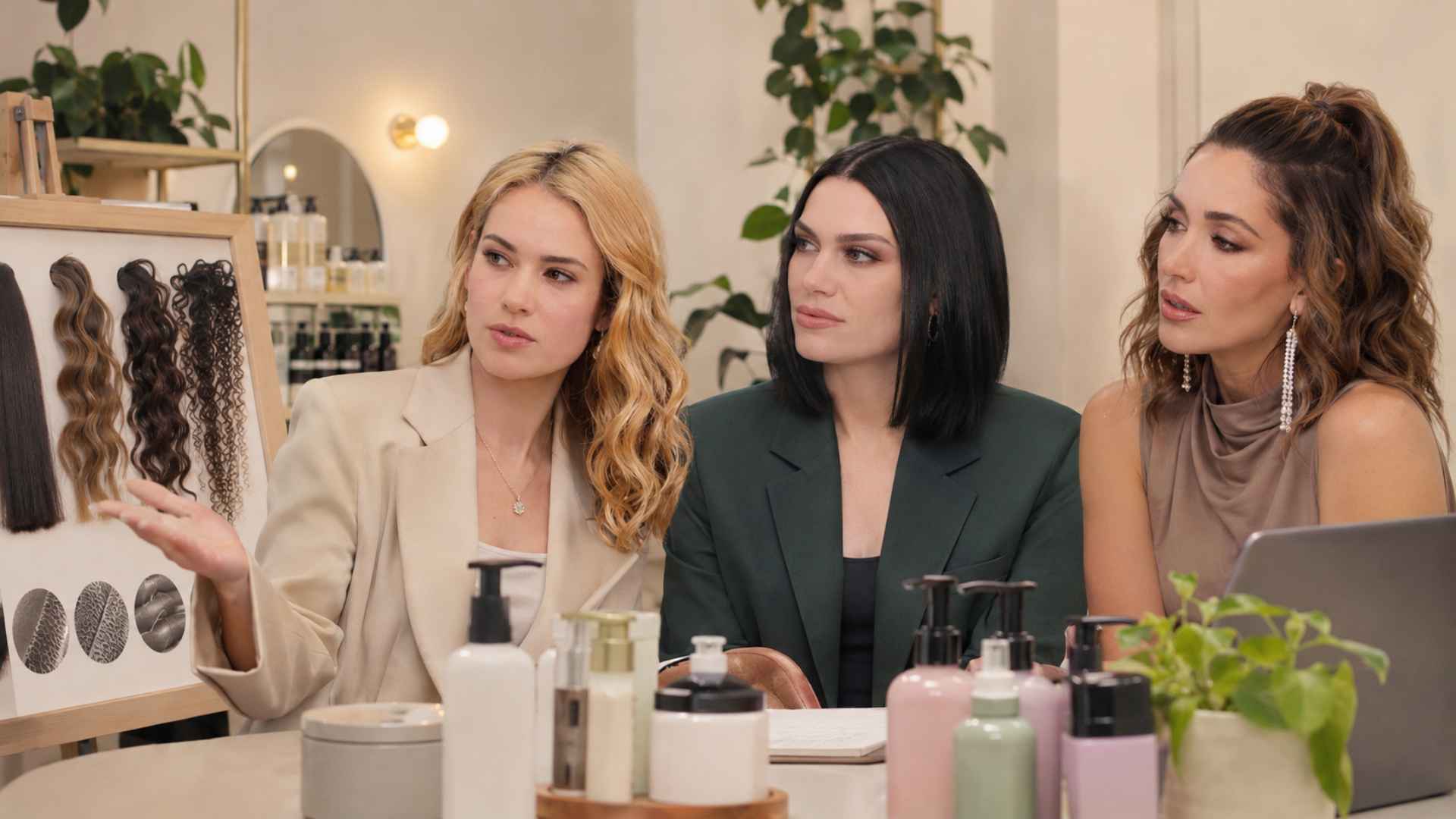
Hair porosity refers to the way a hair fiber interacts with water. It is influenced by the structure of the cuticle, the outer layer over the cortex. When the cuticle is relatively intact, the fiber resists wetting and limits friction. Damage to this surface can change water uptake, increase tangling, and affect the way conditioners deposit on hair. These differences affect product choice.
Porosity is described as low, medium, or high, but these labels are practical descriptions rather than standardized diagnoses. Chemical treatments, sunlight, and mechanical stress can all influence a strand’s condition. Hair near the scalp may behave differently from older lengths, particularly after coloring or heat styling. The ends have endured more washing, brushing, and environmental exposure than newly grown roots. Porosity also differs from texture: straight, wavy, curly, and coily hair can each have varying degrees of damage and water permeability.
Product selection therefore requires more than assigning one porosity label to an entire head of hair. Strand diameter, density, scalp oil, and hairstyles also affect which formulas feel comfortable. For someone who regularly wears a ponytail, the objective is to reduce friction without leaving residue that restricts movement. Care begins with the fiber’s condition, not a rigid category.
Hair Structure and Reliable Porosity Clues
Hair is primarily made of keratin, with overlapping cuticle cells that protect the inner fiber. Bleaching and certain chemical straightening processes can disrupt this protective structure. Research using microscopy and swelling measurements has documented changes in water permeability and mechanical strength after chemical and physical treatment. Such damage cannot be permanently reversed by a conditioner, although cosmetic ingredients can improve the fiber’s surface and reduce further wear.
The popular glass of water float test is not a validated way to assign a hair porosity category. Whether a strand floats depends on surface tension, trapped air, and oils or product residue, not just internal pores. Instead, note patterns across several washes: persistent tangles, rough ends, the effect of conditioning, and a history of bleaching or frequent heat use. Drying time can provide context, but hair length, density, airflow, and humidity also influence it. These observations guide choices without claiming precise measurement. Compare sections of the same head rather than assuming every strand behaves alike.
Product Formulas for Different Porosity Levels
Conditioners work partly by coating hair with substances that reduce static and friction. Positively charged ingredients such as behentrimonium chloride or cetrimonium chloride are attracted to negatively charged regions of the fiber, especially damaged areas. Silicones and other film forming materials can improve slip, while fatty alcohols add softness. Product performance depends on the whole formulation, not one ingredient or packaging label. These approaches should be adjusted to results.
Low Porosity Hair and Lightweight Conditioning
Relatively undamaged hair may feel smooth yet become heavy when several rich products are layered together. Fine strands are especially likely to lose volume under creams or oils. Start with a suitable shampoo and a small amount of rinse out conditioner concentrated on the lengths. Lightweight lotions may provide enough detangling. If residue accumulates, an occasional thorough wash may help, but frequent aggressive cleansing is unnecessary. Low porosity does not prevent water absorption or require high heat. If hair feels coated, reconsider product quantity before blaming its porosity.
Medium Porosity Hair and Balanced Care
Hair that remains manageable through routine washing and has limited damage may need little specialized treatment. Choose a cleanser based on scalp needs, then use conditioner where the hair becomes dry or tangled. Straight or wavy textures may prefer lighter leave ins, whereas thicker curls can benefit from creams with greater lubrication. Adjust quantities before replacing products. Frizz alone does not diagnose porosity; humidity, natural curl pattern, brushing technique, and damaged ends can all contribute to it.
High Porosity Hair and Protective Formulas
Bleached, repeatedly heated, or otherwise weathered lengths often have a rougher surface and higher breakage risk. Conditioning ingredients that adhere to damaged areas reduce combing friction. Formulas containing cationic conditioners, silicones, or film forming polymers may help hair feel smoother, while hydrolyzed proteins may provide temporary support. Results vary with concentration and formulation, so protein is not automatically necessary for every porous strand. Oils can add lubrication, but they do not rebuild missing cuticle cells. Gentler handling and less heat remain important.
Matching Hair Care to Texture and Ponytail Styling
Straight, fine hair may appear oily sooner because sebum spreads more readily along straighter fibers. It may suit a lighter conditioner on the ends and minimal styling cream near the scalp. Wavy hair frequently needs enough slip for detangling without products that flatten its pattern. Choose hold products for the hairstyle, and wash when oil or residue accumulates. Porosity should inform these decisions, not override texture and scalp needs.
Curly and coily strands have bends that can make neighboring fibers catch during grooming, so lubrication and careful detangling are particularly useful. Denser or coarser hair may tolerate richer creams, but curl shape alone does not prove high porosity. Use enough conditioner for slip, work through tangles in sections, and avoid excessive pulling on fragile ends. Hair that has been chemically lightened may need additional surface conditioning regardless of curl pattern. Regular evaluation is more useful than treating every curl type with the same routine.
Ponytails place repeated contact and pressure near the tie, making friction control relevant across all textures. Detangle before gathering the hair, choose a soft tie, and avoid tightening the same spot every day. If leave in products make strands sticky or stiff, reduce the amount before changing the entire routine. If ends remain rough despite conditioning, trimming damaged sections may be more realistic than adding layers of treatments. Suitable products keep hair flexible and manageable while respecting its condition and styling demands. Comfort at the scalp and reduced breakage matter as much as the finished style.