
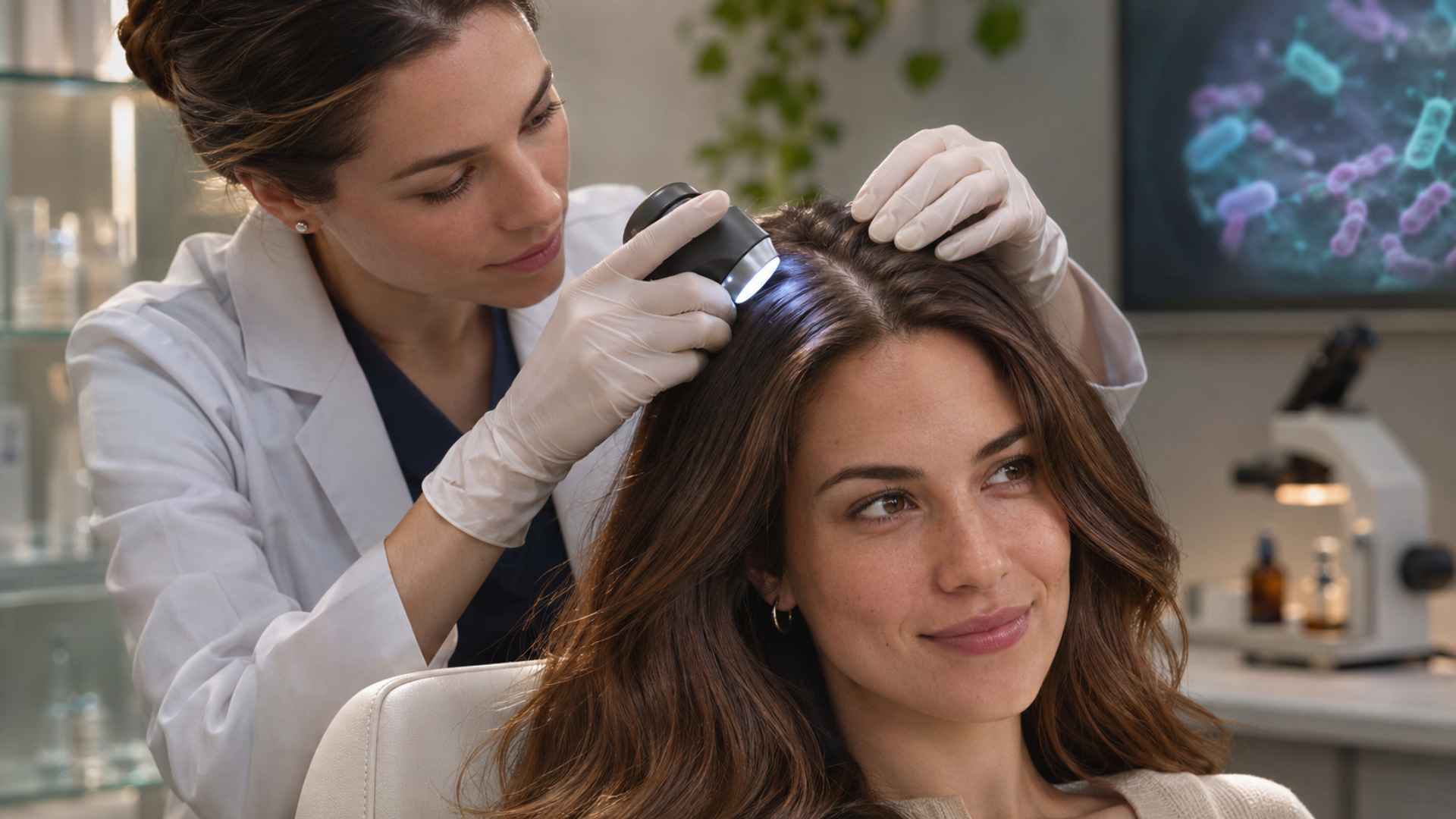
Human skin supports communities of bacteria, fungi, and other microorganisms, and the scalp has its own distinctive environment. Hair follicles, sweat, and oil from sebaceous glands create conditions that differ from the skin on the forearms or legs. These microorganisms are not automatically harmful. Many are normal residents, and their interactions with the skin barrier can influence irritation, flaking, and the overall condition of the scalp.
The scalp’s microbiome attracts attention because dandruff and seborrheic dermatitis are associated with changes in microbial populations. Research frequently examines fungi from the Malassezia genus alongside bacteria such as Cutibacterium and Staphylococcus. Their presence alone does not diagnose a disorder, since they also occur on healthy scalps. Differences in relative abundance and the scalp’s response to these organisms appear more relevant than the simple detection of one species.
Hair health and scalp health overlap, but they are not identical. Hair strands are formed inside follicles and then emerge as largely nonliving fibers, while the surrounding skin remains biologically active. Inflammation or severe scaling can affect scalp comfort and may coexist with some hair disorders. Still, researchers have not established that changing the microbiome by itself reliably increases hair growth or reverses common forms of hair loss.
Microorganisms and the Scalp Environment
Sebum provides lipids that influence which microorganisms thrive on the scalp. Certain Malassezia yeasts use skin lipids and can release fatty acid byproducts that irritate susceptible individuals. Reactions differ because skin barrier properties and immune responses vary from person to person. That helps explain why microbes routinely present on healthy people may be associated with itching and flakes in others, without acting as a simple infection. These responses can also depend on existing skin conditions and individual genetic susceptibility.
Studies of dandruff have reported changes in the balance between Cutibacterium and Staphylococcus species, alongside differences involving Malassezia. These findings describe associations, not a universal formula for a healthy scalp. Sampling methods, age, local climate, hair care habits, and individual biology can influence results. Scientists are still investigating whether microbial shifts initiate inflammation, follow it, or participate in a cycle involving both processes.
Dandruff, Irritation, and Hair Condition
Dandruff commonly produces visible flakes and may involve itching, while seborrheic dermatitis can also cause redness and greasy scaling. These symptoms can make normal grooming uncomfortable and encourage scratching, which may further disturb the skin barrier. Persistent inflammation warrants attention, especially when there is pain, crusting, or patchy hair loss. Similar symptoms can arise from psoriasis, contact dermatitis, or other conditions requiring different treatment.
Hair breakage should also be distinguished from shedding at the root. Bleaching, friction, tight hairstyles, and repeated heat exposure can weaken hair fibers without involving the scalp microbiome. Conversely, excessive shedding may reflect medical, hormonal, nutritional, or stress related factors. Assuming every hair concern begins with microbial imbalance oversimplifies the problem and can distract from treatments matched to the actual cause. Careful clinical examination is often more useful than selecting a treatment based on flakes alone.
Practical Care and Limits of Current Research
Cleansing frequency is best matched to oil production, activity, and personal tolerance rather than an arbitrary universal schedule. Gentle washing removes accumulated sebum, sweat, and styling products. People prone to dandruff may benefit from appropriately formulated anti dandruff shampoos containing established active ingredients. Products should be used according to their instructions, while persistent or severe symptoms deserve evaluation by a qualified clinician.
Microbiome focused products sometimes imply that more microorganisms or greater diversity must always be better. Scalp research does not support such a simple rule. Different species have different roles, and an organism’s behavior depends on its environment and interactions with the host. Evidence for many marketed probiotic or microbiome balancing cosmetic claims remains limited, even though research into microbial communities continues to produce useful findings.
Healthy hair care therefore starts with realistic distinctions. Keeping the scalp comfortable and managing irritation can support normal grooming, but it is not a guaranteed route to thicker hair. When flaking, redness, or shedding persists, identifying the condition matters more than chasing a particular microbial ratio. Current evidence makes the scalp microbiome an important part of dermatology while leaving several questions about direct effects on hair growth unresolved.